
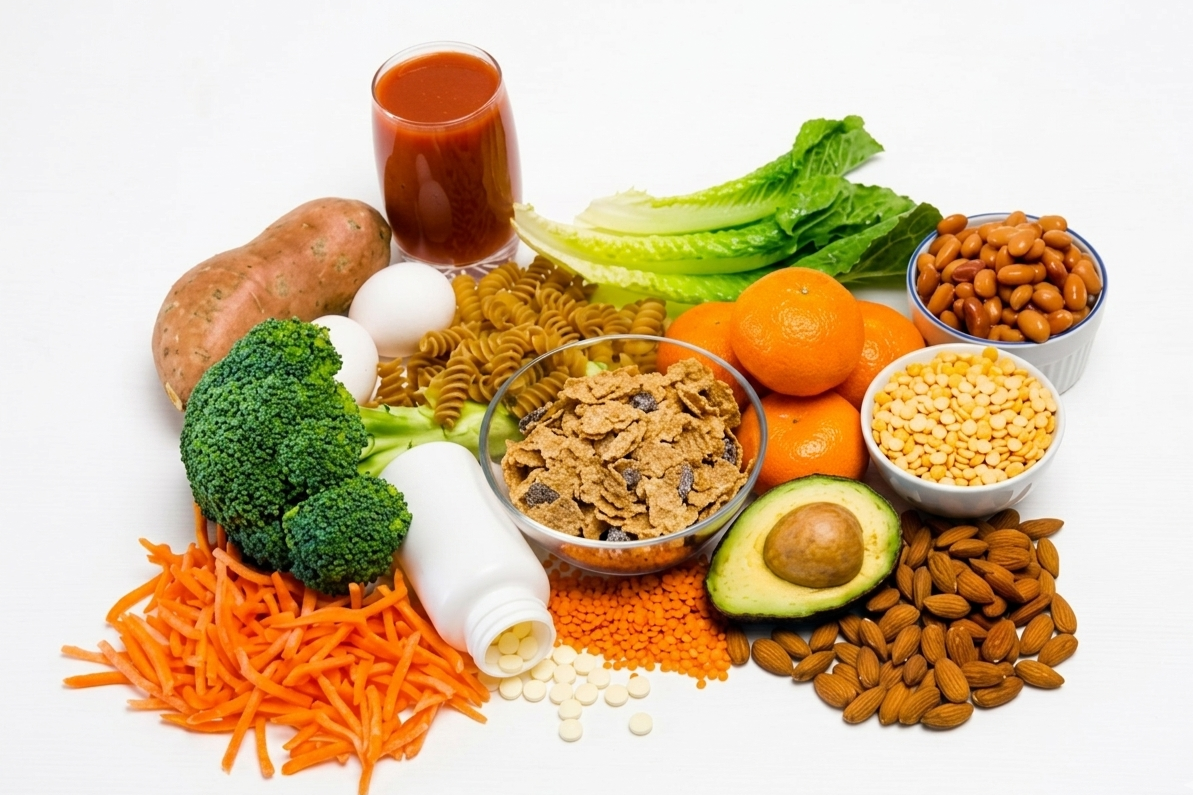
Folate belongs to the B vitamin family and is one of the most important vitamins for pregnancy and overall health. It plays a key role in DNA formation, cell development, the prevention of birth defects, and neurological health.
What is folate, and why is it so important?
Folate is the natural form of folic acid. In the body, it plays a role in:
- DNA Regulation
- Formation of Red Blood Cells
- Tissue Growth
- Cell and Embryonic Development
- Brain function (memory, learning, and behavior)
Folate deficiency has been linked to:
-
- Neurological and Memory Problems
- Chronic inflammation
- Depression
- Cardiovascular Diseases
- Infertility and Miscarriages
- Increased risk of cancer
It also works in conjunction with B vitamins (B6 and B12) to regulate homocysteine, a marker associated with heart disease.
How much folate do you need each day?
| Stage | Daily Recommendation |
|---|---|
| Infants (0–1 year) | 65–80 mcg |
| Young children | 150 mcg |
| Adults | 400 mcg |
| Pregnancy | 600 mcg |
| Breastfeeding | 500 mcg |
Many prenatal supplements contain 800 mcg or more.
Top 10 Foods Rich in Folate (USDA)
| Ranking | Food | Quantity | Folate |
|---|---|---|---|
| 1 | Cooked lentils | 1 cup (70 g) | 358 mcg |
| 2 | Black beans (caritas) | 1 cup (240 g) | 356 mcg |
| 3 | Pinta beans | 1 cup (200 g) | 294 mcg |
| 4 | Cooked spinach | 1 cup (180 g) | 262 mcg |
| 5 | Black beans | 1 cup (200 g) | 256 mcg |
| 6 | Cooked liver | 85 g | 215 mcg |
| 7 | Chickpeas | 1 cup (220 g) | 172 mcg |
| 8 | Cooked broccoli | 1 cup (180 g) | 168 mcg |
| 9 | Mango | 1 cup (165 g) | 145 mcg |
| 10 | Cooked beets | 1 cup (180 g) | 136 mcg |
13 More Foods Rich in Folate
| Food | Portion | Folate |
|---|---|---|
| Papaya | 1 unit | 108 mcg |
| White rice | ½ cup (100 g) | 90 mcg |
| Asparagus | 4 points | 89 mcg |
| Peanuts | ¼ cup (38 g) | 82 mcg |
| Sunflower seeds | ¼ cup (30 g) | 82 mcg |
| Okra | 1 cup | 74 mcg |
| Romaine lettuce | 1 cup (40 g) | 64 mcg |
| Kale | 1 cup (60 g) | 60 mcg |
| Raw spinach | 1 cup (60 g) | 58 mcg |
| Orange | 1 medium | 40 mcg |
| Poached salmon | 85 g | 30 mcg |
| Grapefruit | 1 unit | 20 mcg |
| Egg | 1 unit | 22 mcg |
Example of a daily menu high in folate
This menu makes it easy to get more than 800 mcg per day:
Breakfast Oatmeal with papaya, milk, and a hard-boiled egg (164 mcg)
Appetizer Orange (40 mcg)
Food Liver, collard greens, rice, beans, and mango (655 mcg)
Afternoon Snack Peanuts (82 mcg)
Dinner Salmon, potatoes, broccoli, salad (287 mcg)
Approximate daily total: 1,228 mcg of folate
Key Functions of Folate in the Body
- Prevention of neural tube defects (spina bifida, cleft palate)
- Support for Fetal Brain Development
- Improved Fertility
- Prevention of Chronic Inflammation
- Cardiovascular Protection
- Cognitive support (memory and concentration)
Relevant scientific research
Studies have shown that folate deficiency can affect:
- Brain Development and Memory
- DNA Methylation
- Regulation of Proteins Associated with Brain Tumors
- Risk of Birth Defects During Pregnancy
It has also been observed that supplementation and diets rich in folate improve pregnancy outcomes and fetal development.
Sources
- Tomizawa, H., et al. Genes, Brain, and Behavior (2015)
- Li, W. et al. J Nutr Health Aging (2015)
- Li, Y.F. et al. Asia-Pacific Journal of Clinical Nutrition (2014)
- Thaler, C.J. Obstetrics and Gynecology (2014)
- USDA Database
- NIH Office of Dietary Supplements