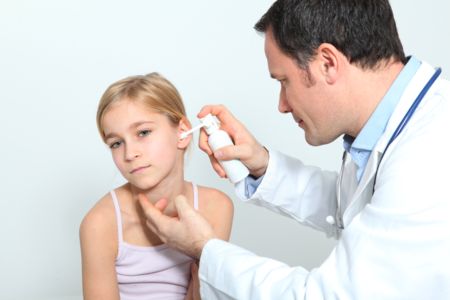
Chiropractic care offers a natural and effective approach to treating otitis media in children. Discover how chiropractic adjustments can improve children's hearing health.
Chiropractic Care and Otitis Media
Objective:
To conduct an experimental study of the Chiropractic Care for Otitis Media in children using tympanography as an objective measure.
And to propose possible mechanisms by which subluxation may be involved in the pathophysiology of otitis media.
Design: The Case Series
Setting:Cases presented at a private clinical practice in New Rochelle, New York. The cases were referred by various sources, including pediatricians, other medical specialists, chiropractors, and parents.
Participants: 332 children who were consecutively enrolled and had previously been diagnosed with otitis, Aged 27 days to 5 years; the primary outcome was measured as follows: A parent/guardian questionnaire was used to determine historical data regarding previous episodes of otitis media. Age at onset of the initial otitis media, feeding history, history of antimicrobial therapy, remission patterns, and birth history.
Otoscopic and tympanographic data were collected, as well as data regarding the number of treatments administered to resolve otitis media. Data regarding recurrence rates over a six-month period were also collected.
Results:
The average number of treatments administered by type of otitis was as follows: acute otitis media (n=127) 4.0 ± 1.03, chronic/serous otitis media (n=104) 5.0 ± 1.53, for mixed bilateral otitis media (n=10): 5.3 ± 1.35.
And in cases where no otitis was initially detected on otoscopic and tympanographic examination (but with a history of multiple fights) (n=74), 5.88 ± 1.87.
The number of days it took for otoscopic findings to return to normal was 6.67 ± 1.9 for chronic/serous cases, 8.57 ± 1.96 for acute cases, and 8.3 ± 1.00 for mixed cases.
The number of days it took for tympanographic findings to normalize: 8.35 ± 2.88, acute chronic/serous 10.18 ± 3.39, and mixed 10.9 ± 2.02. The total repeat rate over a six-month period following the initial office visit was 11.02% for acute, 16.34% for chronic/serous, 30% for mixed cases, and 17.56% for no recurrence.
Conclusion:
To the best of our knowledge, this is the first time that tympanography has been used as an objective measure of the effectiveness of chiropractic adjustments in the treatment of children with otitis media.
Tympanography has been used extensively in the medical evaluation of children with otitis media; it also serves as a bridge through which the fields of chiropractic and medicine can begin to communicate regarding otitis media.
The results indicate that there is a cA strong correlation between chiropractic adjustment and the resolution of otitis media for the children in this study.
This experimental study can now serve as a starting point from which the chiropractic profession can begin to examine its role in the treatment of children with otitis media.
Large-scale clinical trials need to be conducted in the field using tympanography as an objective measure. In addition, the role of occipital fit needs to be examined.
This study begins the process of examining the role of craniovertebral subluxation in the pathogenesis of otitis media, and the effectiveness of chiropractic adjustment in resolving it.
Source: Journal of Clinical Chiropractic Pediatrics 1997 (Oct); 2 (2)
Joan M. Fallon, C.C., F.I.C.C.P.
More information about ear infections at www.quiropractica1.com