¿What Is a Herniated Disc, and What Are Its Symptoms?
Herniated Disc in Mataró: Causes, Symptoms, and Treatment Options
A herniated disc is one of the most common spinal problems and one of the leading causes of lower back pain, neck pain, and sciatica. Although many people have heard of it, they don’t always know how it occurs, what its symptoms are, or what treatment options are available.
If you have a herniated disc in Mataró, understanding the cause of the problem is the first step toward finding an appropriate solution.
What is a herniated disc?
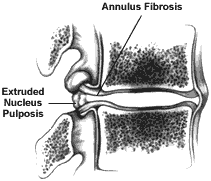
Between each vertebra in the spine is an intervertebral disc that acts as a natural shock absorber. These discs help absorb impact and allow the back and neck to move.
A herniated disc occurs when part of the disc shifts or protrudes from its normal position, which can irritate or compress nearby nerve structures.
Hernias can occur anywhere along the spine, although they are most common in:
 The lumbar region (lower back).
- The cervical region (neck).
How does a herniated disc develop?
Contrary to what many people believe, a herniated disc rarely develops overnight.
In most cases, it is the result of years of wear and tear and accumulated stress on the spine. Among the most common factors are:
- Prolonged poor posture.
- Sedentary work.
- Repetitive movements.
- Frequent lifting of loads.
- Falls and Accidents.
- Lack of spinal mobility.
- Loss of the back's natural curves.
Over time, these stresses can affect the intervertebral discs, eventually leading to their progressive deterioration.
In many cases, a seemingly simple movement—such as bending down to pick up an object or standing up from a chair—can trigger symptoms of a hernia that has been developing for years.
What are the symptoms of a herniated disc?
Symptoms depend on the location of the hernia and the degree of nerve irritation or compression it causes.
The most common ones are:
- Lower Back or Neck Pain
It can develop gradually or suddenly and usually worsens with certain movements or postures.
- Referred pain
When a herniated disc compresses a nerve root, the pain may radiate toward:
-
- The leg (sciatica).
- The arm.
- The shoulder.
- The hand.
- Tingling and numbness
Many people describe feelings of numbness, tingling, or loss of sensation in their arms or legs.
- Muscle weakness
Nerve compression can affect muscle strength and make it difficult to perform everyday activities such as walking, climbing stairs, or holding objects.
- Limited mobility
Movements can become painful, and the back loses some of its functional capacity.
Does a herniated disc always cause pain?
Not necessarily.
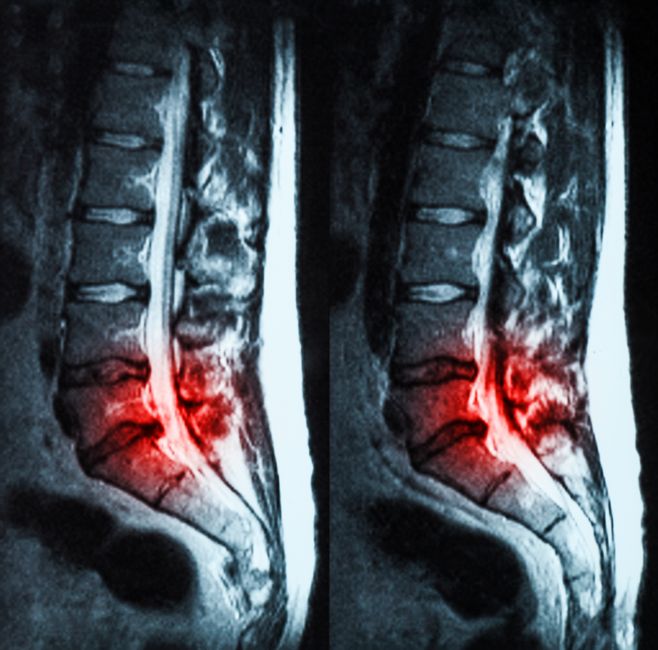
Several studies have shown that many people have herniated discs on imaging tests without experiencing any symptoms.
Therefore, the presence of a hernia on an MRI scan does not always explain a patient's pain. The most important thing is to correlate the radiological findings with the clinical examination and symptoms.
When should you see a professional?
It is advisable to seek a professional evaluation if you experience:
- Persistent lower back or neck pain.
- Sciatica.
- Tingling in the arms or legs.
- Muscle weakness.
- Restriction of movement.
- Recurrent episodes of back pain.
An early evaluation can help identify the cause of the problem and determine the most appropriate care strategy for each case.
Chiropractor in Mataró (Maresme) for Herniated Discs
At the Marc Bony Chiropractic Center, we conduct an individualized assessment of each patient to determine the condition of their spine and provide a care plan tailored to their needs.