
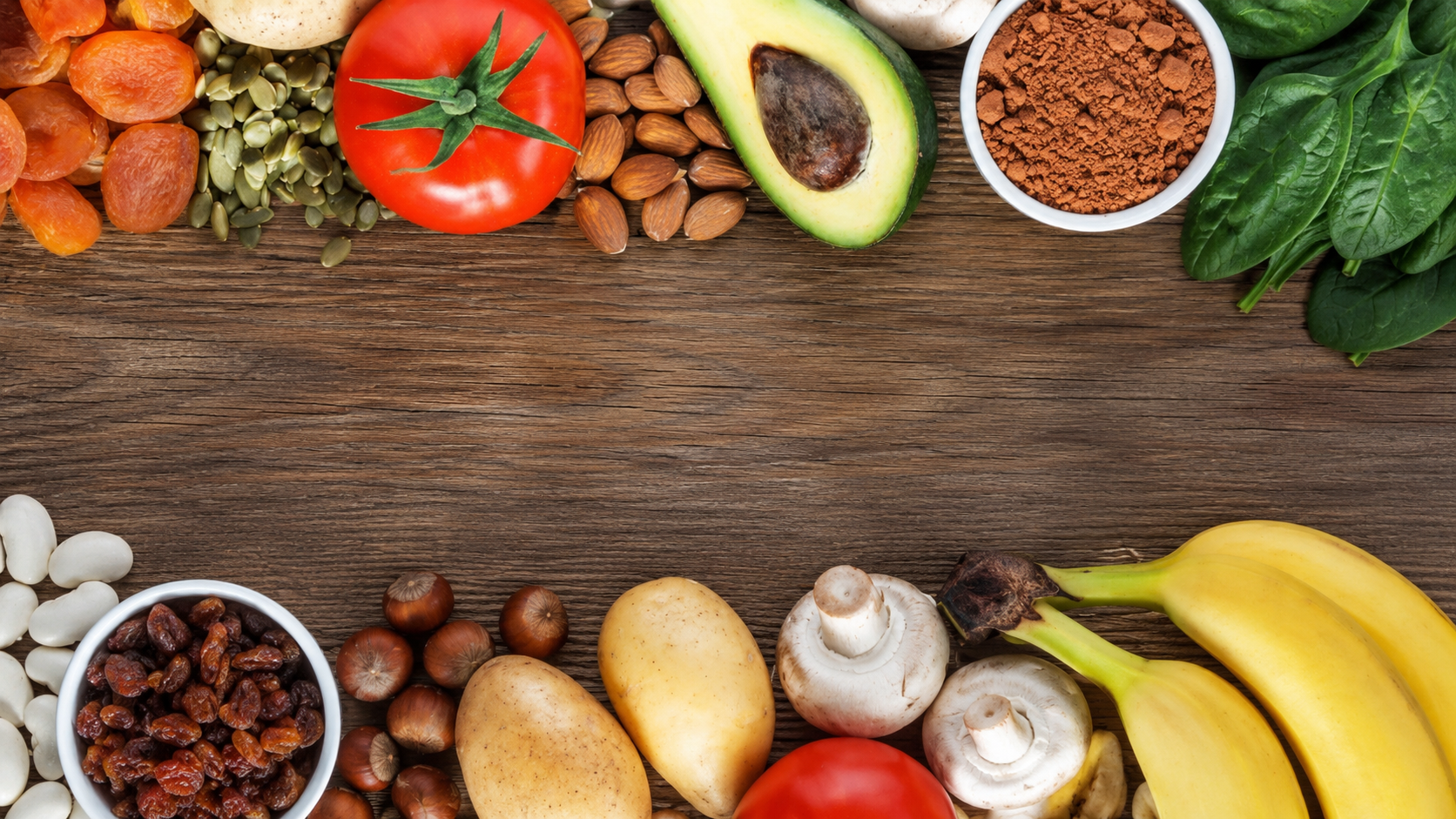
Potassium is essential for fluid balance and heart function. In this article, learn about its importance and how to make sure you’re getting enough of it in your daily diet.
How much potassium do you need each day? Potassium is an essential mineral
Potassium is the third most abundant mineral in your body, and it plays an important role in various bodily processes.
However, very few people consume enough. In fact, nearly 98% of all adults are not meeting the daily intake recommendations.
Here, we'll tell you how much potassium you need each day, as well as why it's important for your health.
What is potassium?
Potassium is an incredibly important mineral and electrolyte. It is found in a variety of whole foods, including leafy greens, legumes, and fish, such as salmon. .
About 98% of the potassium in your body is found inside cells. Of this, 80% is found in muscle cells, while 20% is found in bone, the liver, and red blood cells.
This mineral plays an essential role in a variety of processes in the body. It is involved in muscle contractions, heart function, and fluid balance.
Despite its importance, very few people worldwide get enough of this mineral.
A diet rich in potassium is associated with a lower risk of high blood pressure, kidney stones, and osteoporosis, among other benefits.
Potassium is an important mineral and electrolyte. It plays a role in muscle contractions, heart function, and the regulation of fluid balance.
Is Your Deficiency Common?
Unfortunately, most adults do not get enough potassium.
In many countries, it is common to blame the Western diet, likely because it favors processed foods, which are poor sources of this mineral
However, just because people don't get enough of it doesn't mean they have a deficiency.
A potassium deficiency, also known as hypokalemia, is characterized by a blood potassium level below 3.5 mmol per liter.
Surprisingly, deficiencies are rarely caused by a lack of potassium in the diet.
They usually occur when the body loses too much potassium, such as with chronic diarrhea or vomiting. You can also lose potassium if you are taking diuretics, which are medications that cause your body to lose water.
The symptoms of deficiency depend on blood levels. Here are the symptoms associated with three different levels of deficiency:
• Mild deficiency: When a person has blood levels of 3–3.5 mmol/L. There are usually no symptoms.
• Moderate deficiency: Occurs at 2.5–3 mmol/L. Symptoms include cramps, muscle pain, weakness, and discomfort.
• Severe deficiency: occurs at levels below 2.5 mmol/L. Symptoms include irregular heartbeat and paralysis.
The Best Natural Sources of Potassium
The best way to increase your potassium intake is through your diet.
Potassium is found in a variety of whole foods, especially fruits and vegetables.
Due to the apparent insufficiency of this mineral, nutrition experts have not established a Recommended Daily Intake (RDI).
A CRD is the daily amount of a nutrient that is likely to meet the needs of 97–98% of healthy people.
Below are some foods that are excellent sources of potassium, along with the amount of potassium they contain per 100-gram serving:
• Beet greens, cooked: 909 mg
• Boniato, baked: 670 mg
• Potatoes, baked: 544 mg
• Soybeans, cooked: 539 mg
• Avocado: 485 mg
• Spinach, cooked: 466 mg
• Edamame beans: 436 mg
• Salmon, cooked: 414 mg
• Bananas: 358 mg
Health Benefits
A potassium-rich diet is associated with some impressive health benefits. It can prevent or alleviate a variety of health problems, including:
• High blood pressure: Many studies have shown that diets rich in potassium can lower blood pressure, especially for people with high blood pressure
• Salt sensitivity: People with this condition may experience a 10% increase in blood pressure after eating salt. A potassium-rich diet can eliminate salt sensitivity.
• Stroke: Several studies have shown that a diet rich in potassium can reduce the risk of stroke by 27%.
• Osteoporosis: Studies have shown that a potassium-rich diet can help prevent osteoporosis, a condition associated with porous bones.
• Kidney stones: Studies have found that diets high in potassium are associated with a significantly lower risk of kidney stones than diets low in this mineral
A diet rich in potassium can help lower high blood pressure and reduce salt sensitivity, and it can lower the risk of stroke. In addition, it can help prevent osteoporosis and kidney stones.
How much should you consume per day?
Your daily potassium needs may depend on a variety of factors, including your health, activity level, and ethnicity.
Although there is no RDA for potassium, organizations around the world have recommended consuming at least 3,500 mg per day through food.
These organizations include the World Health Organization (WHO) and countries such as the United Kingdom, Spain, Mexico, and Belgium.
Other countries, including the U.S., Canada, South Korea, and Bulgaria, recommend consuming at least 4,700 mg per day through food
Interestingly, it appears that when people consume more than 4,700 mg per day, there are few, if any, additional health benefits
However, there are several groups of people who may benefit more than others from following the highest recommendation. These people include:
• Athletes: Those who engage in long, intense exercise may lose a significant amount of potassium through sweat.
• African Americans: Studies have found that consuming 4,700 mg of potassium daily can eliminate salt sensitivity, a condition that is more common among people of African American descent.
• High-risk groups: People at risk for high blood pressure, kidney stones, osteoporosis, or stroke may benefit from consuming at least 4,700 mg of potassium per day.
The goal is to consume 3,500–4,700 mg of this mineral per day through food. People who need more potassium should consume the higher amount.
Should I take supplements?
Surprisingly, potassium supplements are not usually major sources of this mineral.
The U.S. Food and Drug Administration (FDA) states that over-the-counter potassium supplements contain less than 100 mg per dose—only 2% of the U.S. daily recommended intake.
The amount in over-the-counter supplements is likely limited due to the risk of overdose.
Taking too much of this mineral can cause excessive amounts to build up in the blood, a condition known as hyperkalemia. In some cases, this can lead to an irregular heartbeat, called cardiac arrhythmia, which can be fatal. .
In addition, studies have found that potassium supplements containing high doses can damage the intestinal lining.
However, people who are deficient in potassium or at risk of deficiency may need a high-dose potassium supplement. In these cases, doctors may prescribe a higher-dose supplement and monitor the patient for any reactions.
How Much Is Too Much? Potassium: An Essential Mineral
Excess potassium in the blood is known as hyperkalemia. The condition is characterized by a blood level higher than 5.0 mmol per liter and can be dangerous.
For a healthy adult, there is no significant evidence that potassium from food can cause hyperkalemia.
For this reason, there is no tolerable upper intake level for dietary potassium. This is the maximum amount a healthy adult can consume in a day without adverse effects.
Hyperkalemia generally affects people with kidney failure or those taking medications that can affect kidney function.
This is because excess potassium is primarily excreted by the kidneys. Therefore, impaired kidney function can lead to a buildup of this mineral in the blood.
However, impaired kidney function is not the only cause of hyperkalemia. Taking too many potassium supplements can also cause it.
Compared to foods, potassium supplements contain smaller amounts and are easy to take. Taking too many at once can overwhelm the kidneys' ability to eliminate excess potassium.
In addition, there are several groups of people who may need less of this mineral than others, including:
• People with chronic kidney disease: This condition increases the risk of hyperkalemia. People with chronic kidney disease should ask their doctor how much potassium is appropriate for them.
• People taking blood pressure medications: Some blood pressure medications, such as ACE inhibitors, may increase the risk of hyperkalemia. People taking these medications may need to monitor their potassium intake.
• Older adults: As people age, their kidney function declines. Older adults are also more likely to take medications that affect the risk of hyperkalemia.
It is difficult for a healthy adult to get too much potassium from food. However, people with kidney problems, as well as the elderly and those taking blood pressure medication, may need less potassium.
www.quiropractica1.com