
Chiropractic, a natural health approach, has been the subject of study by doctors such as Dr. Winsor. Find out how his research has validated this practice in Mataró.
How a Doctor Discovered Chiropractic
Dr. Winsor's Autopsies
The medical profession has been putting off research into chiropractic, but Henry Winsor, a physician from Haverford, Pennsylvania, believed that more research should be done on chiropractic.
“I wonder how chiropractors are able to achieve such good results,” “He was getting excited.”.
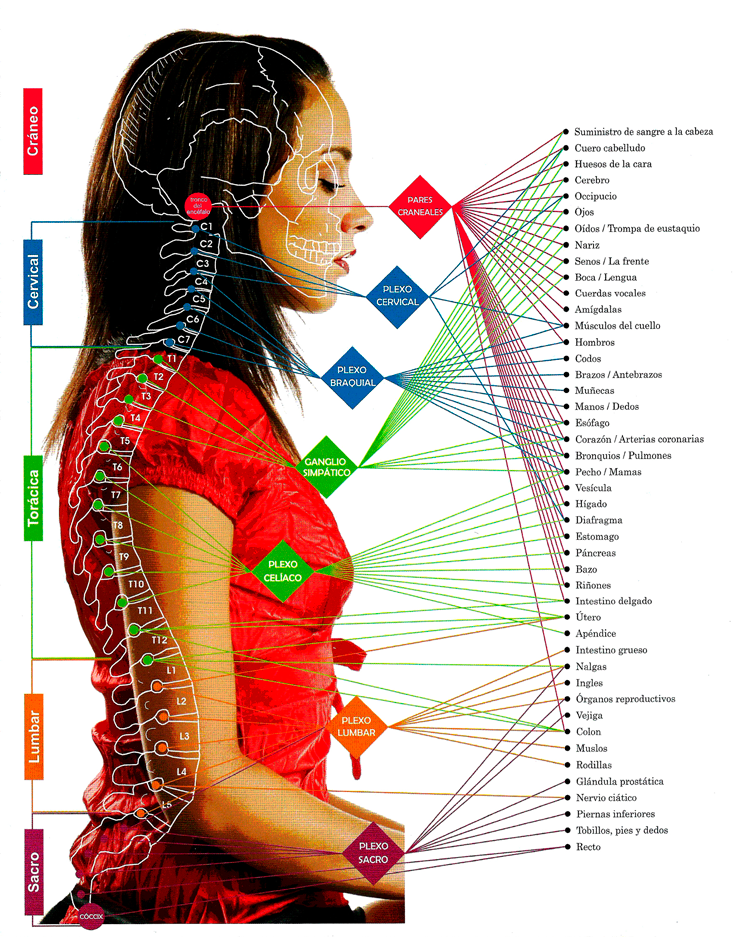
Chiropractors claim that by “adjusting” the fifth thoracic vertebra, located between the shoulder blades, they can cure stomach ailments and ulcers. “Adjusting” a lumbar vertebra can help with menstrual cramps and spasms. By “adjusting” the fifth cervical vertebra, they can relieve thyroid pain, and so on—for kidney disease, constipation, heart disease, lung disease, and many other ailments.
But how can they do that?
We doctors criticize them, but what if they've actually discovered a new way to cure diseases without drugs (medications)?.
After graduating from medical school, the Dr. Winsor He researched the chiropractic literature and was inspired to conduct the following experiment.
To dissect human and animal cadavers to determine whether there was any relationship between any diseased internal organs examined during the autopsy and the vertebrae corresponding to the nerves that supply those organs.
As Dr. Winsor wrote: “The purpose of this autopsy (dissection) was to determine whether there was any connection between the minor curvatures of the spine and the diseased organs; or whether the curvatures and the organs were completely independent of one another.”.
If chiropractors are correct in their theory, then a misaligned vertebra that compresses a nerve leading to the kidneys could weaken the kidneys, and that could cause kidney disease. If the theory were incorrect, then a misalignment of the “vertebra corresponding to the kidneys” would not cause any problems with the kidneys. The University of Pennsylvania granted Dr. Winsor permission to conduct his experiments. In a series of three studies, he dissected a total of 65 human cadavers and 22 cat cadavers.
What did the autopsies reveal?
Was there a connection between the diseased organs and the spine? Below, we’ll reveal Dr. Winsor’s findings:
“… 221 different diseased structures of the spine were found. It was observed that 212 of these structures were associated with the nerves of those vertebrae and showed greater degeneration.”.
Nine diseased organs were associated with different segments of the sympathetic nervous system corresponding to misaligned vertebrae. These figures cannot be expected to match exactly… since an organ may receive sympathetic nerve fibers from several segments of the spine, and several organs may be supplied with sympathetic nerve fibers from the same segments of the spine.”.
In other words, there was a correlation of nearly 100% between the “minor curves” of the spine and diseases of the internal organs. Let’s examine some of these categories of diseases:
Stomach Diseases: In 9 cases of stomach disease, all of them involved misalignments in the middle or thoracic spine (between the shoulders and the shoulder blades).
Lung Disease: In 20 cases of lung disease, misalignments were found in the upper dorsal region (the area just below the nape of the neck).
Liver Diseases: 13 cases of liver disease were associated with the lower mid-back region.
Gallbladder Stones: Five cases of gallbladder stones were linked to spinal misalignment.
Pancreatic Diseases: 13 cases of pancreatic disease were related to the corresponding misalignment of the spine.
Bladder Disease: 11 cases of bladder disorders related to spinal misalignment.
Kidney Diseases: In 17 cases of kidney disease, there was misalignment of the lower thoracic vertebrae.
Prostate and Bladder Disease: In 8 cases of prostate and bladder disease, there was misalignment in the lower back vertebrae (specifically the 1st, 2nd, and 3rd lumbar vertebrae).
Uterine Diseases: In two cases of uterine disorders, there was misalignment of the second lumbar vertebra.
Heart Disease: In all 20 cases of heart and pericardial disease, there was misalignment of the five upper thoracic vertebrae.
Thymus Disease: In two cases of thymus disease, misalignments were found in the lower neck and upper back.
In conclusion:
Dr. Winsor's findings were published in the respected medical journal *The Medical Times* and can also be found in any medical library.
Conclusion
Dr. Winsor was not alone in his discoveries, as similar studies conducted by other researchers over the following decades confirmed his initial conclusions: “A properly aligned spine is essential for the body’s good health.”.
Although many doctors are unaware of the connection between the spine and disease, the medical literature is replete with numerous studies that support the theory and effectiveness of chiropractic care. An unhealthy spine can cause illnesses in many parts of the body, and a chiropractic examination and adjustment can help in the treatment and prevention of illnesses and ailments.