How to Assimilate Iron
Iron is an essential mineral that your body needs to function properly.
Therefore, it is vitally important to consume adequate amounts in your daily diet.
Interestingly, the food you eat influences not only how much iron you consume, but also how well it is absorbed in the body.
Once it is absorbed by the body, it is used as a building block for hemoglobin, a protein found in red blood cells that helps transport oxygen around your body.
Iron is also a component of myoglobin, an oxygen storage protein found in muscles. This oxygen is used when the muscles are used.
The recommended intake range is 7-18 mg per day for the general population and up to 27 grams for pregnant women. .
Foods that contain it
You may have heard that you can get iron from red meat, but there are many other foods that naturally contain iron.
In food, iron is present in two forms: heme and non-heme.
Sources of heme iron
Heme iron is found in animal foods containing hemoglobin, such as meat, fish and poultry.
Heme iron is the best form of iron, as up to 40% of it is readily absorbed by the body.
Good sources of heme iron include:
- Beef
- Pig
- Chicken
- Veal
- Fish such as halibut, pollock, perch, salmon or tuna
- Seafood such as clams, oysters and mussels
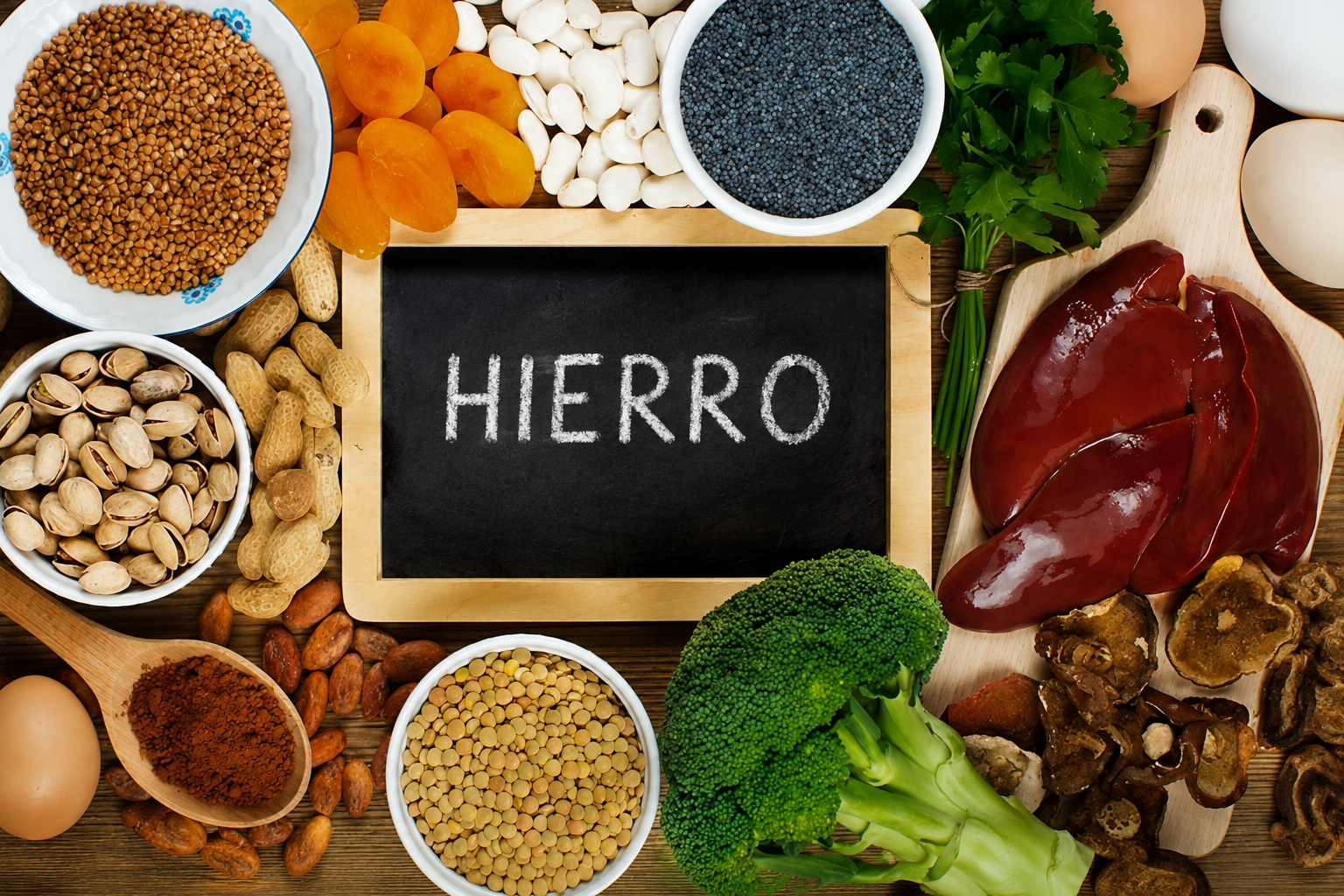
Red meat and offal such as liver are especially good sources.
Non-heme sources of iron
Non-heme iron comes mainly from plant sources and is present in grains, vegetables and fortified foods.
This is the form added to iron-fortified foods as well as many supplements.
It is estimated that 85-90% of total iron intake comes from the non-heme form, while 10-15% comes from the heme form.
In terms of its bioavailability, non-heme iron is absorbed by the body significantly worse than heme iron.
Good sources of non-heme iron include:
- fortified cereals, rice, wheat and oats
- Leafy green vegetables such as spinach and kale
- Dried fruits such as raisins and apricots
- Beans such as lentils and soybeans
Summary: Heme iron is found in foods of animal origin, while non-heme iron comes from plant sources. The heme form is better absorbed by the body than the non-heme form.
Certain populations may be at risk for deficiency
Iron deficiency is the most common cause of anemia , which affects one billion people worldwide.
A person who is deficient in iron may have various symptoms, such as fatigue, dizziness, headaches, sensitivity to cold and shortness of breath when performing simple tasks.
Moreover, iron deficiency can result in poorer attention span and mental function. In fact, being deficient during early childhood has been linked to lower IQ.
Children, adolescents and women of reproductive age, especially during pregnancy, are at increased risk of iron deficiency. This is because their intake does not match their body's high demand for it.
In addition, it is common to think that vegetarians and vegans are more prone to iron deficiency. But, interestingly enough, studies have shown that vegetarians and vegetarian diets contain as much, if not more, iron than diets containing meat.
However, although vegetarians may consume more iron than non-vegetarians, a review found that they are still at greater risk of deficiency.
This is because they consume mainly non-heme iron, which is not as well absorbed as the heme form from animal products.
Generally, it is recommended that vegetarians multiply their recommended iron intake by 1.8 times to compensate for reduced absorption.
Summary: Iron deficiency is very common. Those most at risk are children, adolescents, women of reproductive age, pregnant women, vegetarians and vegans.
Foods that help you absorb more iron
While not all iron in the diet is absorbed equally, some foods can improve the body's ability to absorb it.
Foods rich in vitamin C
Vitamin C has been shown to improve iron absorption. It captures iron and stores it non-heme in a form that is more easily absorbed by the body.
Foods rich in vitamin C are citrus fruits, green leafy vegetables, peppers, melons and strawberries.
In one study, taking 100 mg of vitamin C with a meal increased the absorption of iron by 67%
Therefore, consuming citrus juice or eating other foods rich in vitamin C while you are eating foods rich in iron can increase your body's absorption.
In vegetarian and vegan diets, iron absorption can be optimized by including vitamin C-containing vegetables during meals.
Vitamin A and beta-carotene foods
Vitamin A plays a key role in maintaining healthy vision, bone growth and the immune system.
Beta-carotene is a red-orange pigment found in plants and fruits. It can be converted to vitamin A in the body.
Good sources of beta-carotene and vitamin A are carrots, sweet potatoes, spinach, kale, pumpkin, red peppers, cantaloupe, apricots, oranges and peaches.
A study of 100 people who received cereal-based meals found that the presence of vitamin A increased iron absorption by up to 200% for rice, 80% for wheat and 140% for corn.
In the same study, the addition of beta-carotene to meals increased the absorption of more than 300% for rice and 180% in wheat and corn.
Meat, fish and poultry
Meat, fish and poultry not only provide heme iron that is well absorbed, they can also stimulate the absorption of the non-heme form.
Several studies have reported that the addition of meat, poultry or fish to a cereal-based meal resulted in approximately 2-3 times greater absorption of non-heme iron.
Research has also shown that the addition of 75 grams of meat to a meal increased non-heme iron absorption by about 2.5 times compared to a meal without it.
Based on the findings of the study, it was estimated that 1 gram of meat, fish or poultry provides a similar potentiating effect to that of 1 mg of vitamin C.
Summary: Absorption of iron from food can be improved by consuming foods rich in vitamin C, vitamin A or beta-carotone. Eating meat, fish or poultry with other foods may also help.
Foods that can hinder iron absorption
Just as some foods can enhance iron absorption, others can hinder it.
Foods that contain phytate or phytic acid
Phytate or phytic acid, is found in foods such as whole grains, cereals, soybeans, nuts and legumes.
Even a small amount of phytate can significantly decrease iron absorption. .
In one study, as little as 2 mg of phytate in food inhibits iron absorption by 18% when added to wheat rolls. And when 250 mg of phytate is eaten, it is not absorbed to 82%.
However, the negative effect of phytate can be counteracted by the consumption of foods that enhance the absorption of non-heme iron, such as vitamin C or meat.
Calcium-rich foods
Calcium is an essential mineral for bone health.
However, some evidence shows that it hampers iron absorption, regardless of whether the source is an dairy product o calcium supplement
Studies have shown that the 165 mg of calcium from milk, cheese or a supplement reduced iron absorption by about 50-60%.
This is concerning, as increased calcium intake is commonly recommended for children and women, the same populations that are at risk for iron deficiency.
However, most of the studies were short-term and conducted at individual meals. A comprehensive review of long-term studies found that calcium and dairy products have no adverse effect on absorption.
To maximize absorption, foods rich in calcium should not be eaten with foods that provide most of their dietary iron.
In the case of supplements, calcium and iron supplements should be taken at different times of the day, if possible.
Foods containing polyphenols
Polyphenols are found in different amounts in plant foods and beverages, including vegetables, fruits, some cereals and legumes, tea, coffee and wine.
Coffee and tea, both of which are widely consumed around meals, are high in polyphenols, and have been shown to inhibit the absorption of non-heme iron.
In one review, drinking a cup of black tea with a meal reduced iron absorption by 60-70%, regardless of whether the tea was weak, normal or strong.
However, when the participants drank tea between meals, the reduction in absorption was only approximately 20%
To counteract the negative effect of polyphenols, be sure to leave a couple of hours between the iron-rich food and your tea or coffee.
Summary: Foods containing phytates, calcium and polyphenols can significantly reduce iron absorption.
The health risks of excess iron
Iron toxicity from food sources is rare. Once it is consumed, your body has its own balancing system to make sure it gets enough.
However, one report showed that fatal overdoses were possible with excessive intake of iron supplements.
Excessive iron levels can also occur in some people with a disease called hemochromatosis . This is usually caused by a gene that enhances absorption.
Other causes of iron overload include repeated blood transfusions, massive dietary doses and rare metabolic disorders.
In addition, the consumption of too much iron over time can cause large deposits of it to form in the liver and other tissues.
Consequently, it can lead to diabetes, heart disease and liver damage.
You should probably never take an iron supplement unless when it is recommended to you by a health care professional.
Summary: Excessive iron intake can have health risks. Because of this, supplements are not recommended for most people.
Tips for getting enough iron
The following tips can help you maximize your dietary iron intake:
- Eating lean red meat:This is the best source of easily absorbed heme iron. Eating several times a week can help if you are deficient.
- Eating chicken and fish:These are also good sources of heme iron. Eat a variety of them.
- Consume foods rich in vitamin C:Eat foods rich in vitamin C during meals to increase the absorption of non-heme iron. For example, lemon juice sprinkled on leafy greens will increase the amount absorbed.
- Avoid coffee, tea or milk near meals:Avoid these during meals that contain iron-rich foods. Have your coffee or tea between meals instead.
- Choose foods rich in non-heme iron:If you do not eat meat and fish, include plenty of iron-rich plant foods in your diet.
Summary: To maximize your iron intake, try to include meat, fish, poultry, beans and lentils in your diet, as well as foods rich in vitamin C during your meals. Also, spread out your tea, coffee and milk intakes between meals.
Conclusion
Iron is a vital mineral that is essential for the functioning of your body. Two types of it are found in foods - heme and non-heme.
Meat, fish and poultry contain the heme form, which is easily absorbed by the body.
Non-heme iron is found mainly in plant foods, but this form is more difficult for your body to absorb. You can improve your body's absorption by consuming foods containing vitamin C, vitamin A, meat, fish and poultry during your meals.
On the other hand, foods containing phytates (cereals and grains), calcium (milk and dairy products) and polyphenols (tea and coffee) can hinder iron absorption.
By carefully selecting the foods you eat and knowing how certain foods can enhance or inhibit absorption, you can make sure you are getting the iron you need.
www.quiropractica1.com