
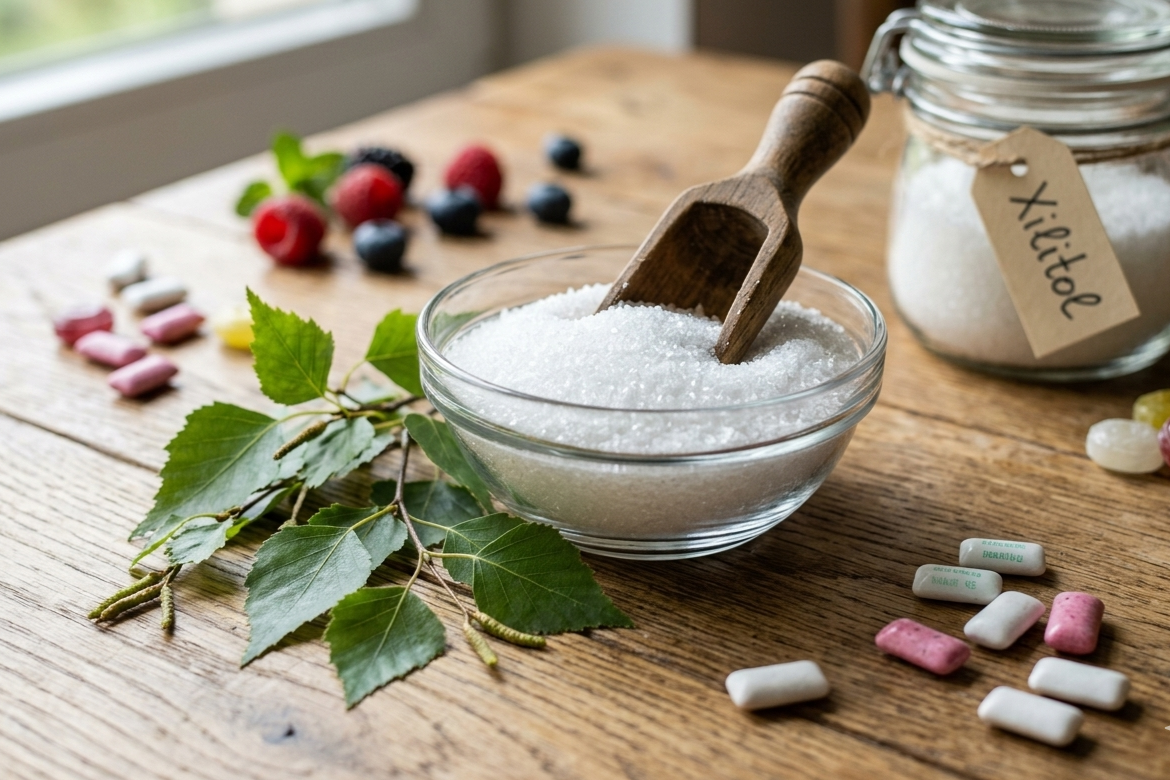
Xylitol: What It Is, Health Benefits, and Risks
What Is Xylitol?
In the broad field of sugar substitutes, xylitol is one of the “new sugars” on the market. But be careful! Once you learn the details, it will become quite obvious that it may not be the sugar your body needs.
Xylitol is now widely used in baked goods, gum, and beverages, and sugar may not be the knight in shining armor that advertisers make it out to be.
Xylitol starts out quite innocently, as this sugar alcohol occurs naturally in some foods such as oats, berries, mushrooms, and even some herbs like birch. So the marketing claim that xylitol is natural is technically true.
Xylitol reduces tooth decay
There are approximately 3,100 studies on xylitol in PubMed, the world's medical database, where doctors and scientists share their work.
Many of these studies focus on the use of xylitol in toothpaste.
For example, a study at an elementary school in Tennessee involving 200 children evaluated the use of a toothpaste containing 49% of xylitol for 30 days, in addition to teaching them how to brush their teeth.
The researchers reported a dramatic reduction in plaque, although they did not specify exactly how much.
The idea behind xylitol is that this sugar alcohol affects the bacteria in the mouth. Some bacteria, such as:
- Neisseria
- Rothia mucilaginosa
- Streptococcus mitis
- Prevotella histicola
They produce acetaldehyde, which can cause cancer, as well as other plaque-associated bacteria such as Streptococcus mutans.
Xylitol inhibits the production of acetaldehyde in bacteria such as Neisseria by approximately 90%.
This may be a benefit of xylitol, but it needs to be studied in depth before deciding whether to include it in one's diet.
Xylitol is a sugar that can be fermented in the gastrointestinal tract
Xylitol is a sugar alcohol that ferments in the digestive tract. This may be one of the reasons why certain sugars cause stomach upset in people with:
- Irritable Bowel Syndrome
- Crohn's Disease
- Celiac Disease
A growing body of research supports the idea that fermentable sugars can cause digestive problems.
When consuming sugar alcohols such as xylitol, you may experience:
- Nausea
- Abdominal pain
- Gases
- Swelling
- Diarrhea
- Constipation
For people with digestive disorders, reducing these sugars can be part of the FODMAP (Fermentable Oligosaccharides, Disaccharides, Monosaccharides, and Polyols) diet, which restricts these compounds and often improves digestive symptoms.
More information: http://shepherdworks.com.au/disease-information/low-fodmap-diet
Be smart about what you put into your body.
Even if a person does not have digestive problems, this does not mean that xylitol is suitable.
Xylitol is produced through industrial processes that include:
- Bacterial Processes
- Use of Chemicals
- High temperatures
Throughout the history of nutrition, it has been observed that foods subjected to high temperatures can produce advanced glycation end products, which are associated with degenerative diseases.
Any chemically treated food loses part of its nutritional “life” and becomes a devitalized substance.
Is xylitol the sugar you want in your diet? Only you can decide.
What Is in Xylitol?
Xylitol is a sugar alcohol that:
- It occurs naturally in small amounts in plants
- It is used as an industrial sweetener
- It is produced through extraction and refining processes
Benefits of Xylitol
- Dental Plaque Reduction
- Improving Oral Health
- Decrease in acid-producing bacteria
Risks of Xylitol
- Intestinal fermentation
- Digestive symptoms in sensitive individuals
- Possible discomfort in people with intestinal problems
- Industrial use in chemical and thermal processes
Serving Suggestions: Xylitol consumption should be evaluated on a case-by-case basis. Although it may have dental benefits, it is not necessarily suitable for everyone.
Sources
- Hopper, B.L. and Garcia-Godby, F. J. Tenn. Dent. Assoc. 2014
- Moritani, K. et al. Oral Dis 2015
- Goebel-Sengel, M. and Monnikes, H. Dtsch Med Wochenschr 2014
http://shepherdworks.com.au/disease-information/low-fodmap-diet