
Responsible for your health... Responsible for your health, you-are-the-captain-of-your-ship, There is certainly a paranoia that…
Simple meditation
The Simple Meditation
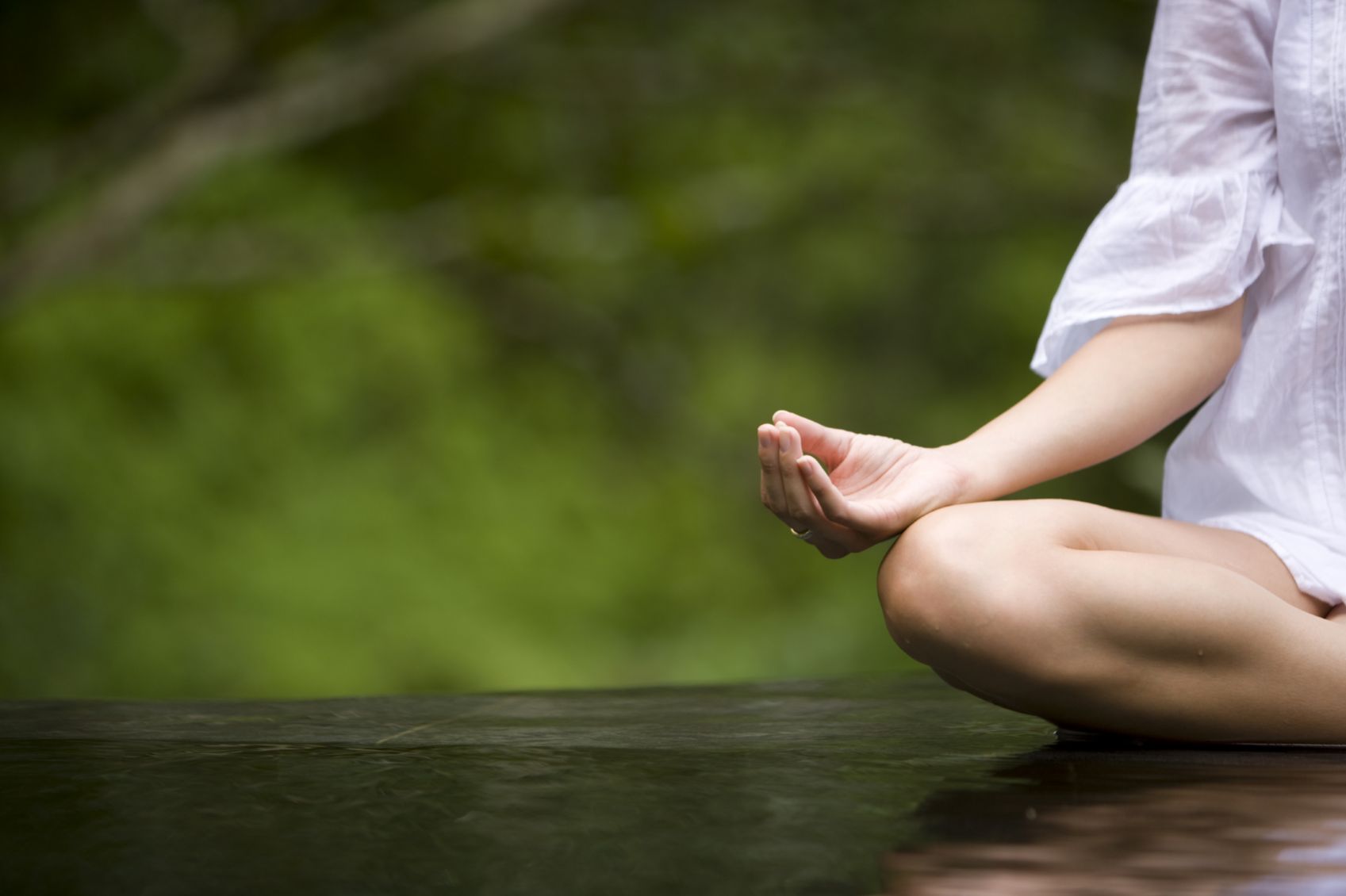
Here we understand meditation as something very basic and simple, which is not tied to any culture. We are talking about a very fundamental act: sitting on the ground, taking a good posture, and coming to feel your place, your own spot on this earth.
It is the means to rediscover ourselves and to rediscover our fundamental goodness, the means to harmonize with authentic reality, without expectation or preconceived idea.
Sometimes meditation is used to refer to the contemplation of a particular subject or object: it is said to meditate on this or that thing; by meditating on a question or a problem, we may find a solution.
At other times, meditation is also practiced to achieve a higher mental state, entering some kind of trance or state of absorption. But here we are talking about a completely different concept of meditation: unconditional meditation, which has no idea or object in mind.
In this case, meditation simply consists of training our state of being so that mind and body can be synchronized.
Through the practice of meditation, we can learn to be without deception or fraud, to be totally authentic and to be fully alive. Our life is an endless journey; it is a wide highway that stretches infinitely into the distance. The practice of meditation allows us to perceive all the textures of the road, and that is what the journey consists of.
Through the practice of meditation, we begin to discover that there is absolutely nothing in us that is a fundamental complaint against anything or anyone. The practice of meditation begins by sitting down and crossing the legs in a tailor’s position.
One begins to feel that by simply being in the present moment, their life becomes malleable and can even become something wonderful. They discover that they can meditate like a king or queen sitting on a throne. The majesty of this situation reveals the dignity that is given when one remains calm in a state of simplicity.
The importance of posture. In the practice of meditation, the upright posture is extremely important. Having the back straight is not an artificial posture; it is the natural position of the human body. What is unusual is to slouch and collapse.
When one slouches, they cannot breathe well, and a slumped posture is also a sign of yielding to neurosis. Thus, by sitting upright, one is proclaiming to themselves and the rest of the world that they are going to be a warrior, a fully human being.
To maintain an upright back, it is not necessary to forcefully lift the shoulders; the upright position comes naturally when sitting, simply but proudly, on the ground or on a meditation cushion. Then, as one has the back straight, they feel no trace of shyness or shame, and therefore do not bow their head.
One is not inclined before anything. Thus, the shoulders automatically straighten, and one begins to have their head and shoulders well planted.
Then they can let their legs rest naturally crossed in a tailor’s position; it is not necessary for the knees to touch the ground. One completes the posture by lightly resting the hands on the thighs, with palms facing down. This position strengthens the feeling of adequately occupying their place.
In this posture, one does not let their gaze wander randomly. They have the feeling of being appropriately there; hence the eyes are open, but the gaze is directed slightly downward, perhaps a couple of meters in front of them. In this way, the view does not wander from side to side, but rather has an even greater sense of something deliberate and defined.
This majestic pose can be appreciated in some Egyptian and South American sculptures, as well as in Eastern statues. It is a universal posture, not limited to a single culture or place.
Beyond Thoughts The practice of seated meditation offers an ideal means to cultivate renunciation.
In meditation, while we work with the breath, we see that all the thoughts that arise are part of the thinking process and nothing more. We do not cling to any of them.
We consider the thoughts that arise during the practice of meditation as natural occurrences, but at the same time, they hold no credentials.
The basic definition of “meditation” is “keeping the mind stable.”
When meditating, if thoughts rise, we do not rise with them; if thoughts fall, we do not fall with them either; we simply observe how thoughts rise and fall.
It does not matter whether they are good or bad, interesting or boring, happy or unhappy: we leave them in peace.
We do not accept some to reject others. We have a broader sense of space that encompasses any thought that may appear.
In other words, in meditation, we can experience a sense of existing, of being, that includes our thoughts but is not conditioned by them or limited by the process of thinking.
We experience our thoughts, label them “thoughts,” and return to the breath, to expanding and dissolving into space.
It is very simple and very profound at the same time. We have the direct experience of our world, and we do not need to put limits on that experience.
We can be completely open, with nothing to defend and nothing to fear. In this way, we are learning to renounce personal territory and narrow-mindedness.
From the echo of meditative awareness, a sense of balance begins to grow, which is a step on the path that leads us to take command of our world.
We feel that we are well mounted in the saddle, that we dominate the unruly horse of the mind. Even though the horse beneath us moves, we are able to stay in the saddle.
As long as we maintain a good posture in the saddle, we can control any sudden and unexpected movement.
And every time we slip due to poor sitting, we simply correct our posture without falling off the horse.
Excerpts from the book “Shambhala. The Way of the Warrior.” (Ed. Kairós)
Take the first step with our guided meditation
Marc Bony, DC
Related Posts