
The 5 Lifestyle Changes High cholesterol increases the risk of heart disease and heart attacks…
8 Healthy Benefits of Nuts
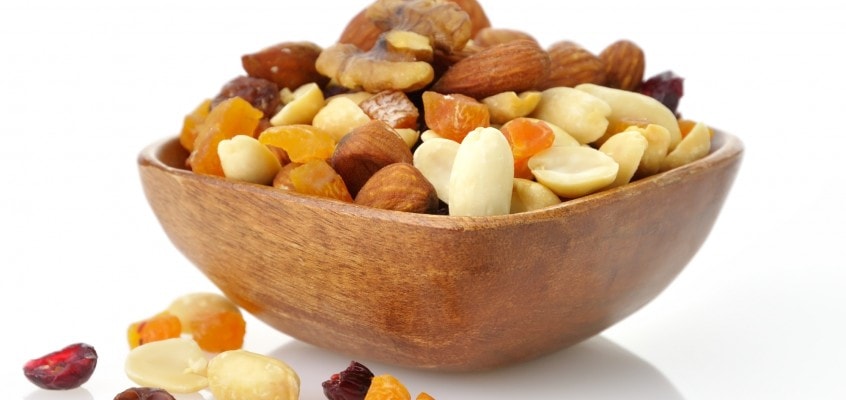
Nuts are a very popular food. They are delicious, advisable, and can be enjoyed in all types of diets. Despite being high in fats, they also have countless health (and weight) benefits. What are nuts? Nuts are considered fruits. However, unlike most fruits, they are not sweet and are high in fat. They have a hard outer shell that must be broken to access the inner fruit. Fortunately, you can also find shelled nuts in the market. Here is a list of the most consumed nuts:
- Almonds
- Brazil nuts
- Cashews
- Hazelnuts
- Macadamia nuts
- Pecans
- Pine nuts
- Pistachios
- Walnuts
Although peanuts are technically legumes like peas and beans, they are often considered nuts due to their similar profile and nutritional characteristics. Let’s take a look at the 8 best nutritional benefits of nuts.
- Nuts are a great source of nutrients
They are highly nutritious. 28 grams of mixed nuts contain:
- Calories:173
- Protein:5 grams
- Fats:16 grams, including 9 grams of monounsaturated fats
- Carbohydrates:6 grams
- Fiber:3 grams
- Vitamin E:12% of RDI
- Magnesium:16% of RDI
- Phosphorus:13% of RDI
- Copper:23% of RDI
- Manganese:26% of RDI
- Selenium:56% of the RDI
Some nuts have a higher amount of certain nutrients than others. For example, just one Brazil nut provides more than 100% of the RDI for selenium. The carbohydrate content of nuts is highly variable. Hazelnuts, macadamia nuts, and Brazil nuts have less than 2 grams of digestible carbohydrates per serving, while cashews have nearly 8 digestible carbohydrates per serving. To be honest, nuts are generally an excellent food to include in a low-carb diet. Conclusion: Nuts are high in fat, low in carbohydrates, and a great source of various nutrients, including vitamin E, magnesium, and selenium.
- Nuts are rich in antioxidants
Nuts are a source of antioxidants. Antioxidants help control free radicals, which are unstable molecules produced as a normal part of metabolism. The production of free radicals increases in response to strong sun exposure, stress, pollution, and other causes. While free radicals can play a beneficial role in the immune response, having too many can lead to cellular damage. When your level of free radicals is too high, your body is in a state of oxidative stress, increasing the risk of diseases. Antioxidants in plant-based foods, including the polyphenols found in nuts, can combat oxidative stress by neutralizing free radicals so they cannot damage cells. ORAC is a method that measures a food’s ability to combat free radicals. One study found that the ORAC of nuts was higher than that of fish. Research has shown that the antioxidants in walnuts and almonds can protect the delicate fats in cells from oxidative damage. In one study, 13 people consumed walnuts, almonds, or a controlled diet meal on three different occasions. The nuts consumed led to higher levels of polyphenols and significantly less oxidative damage compared to the control meal. Another study found that two to eight hours after consuming whole pecans, participants experienced a 26-33% drop in their oxidized LDL cholesterol levels, a major risk factor for heart disease. However, other studies in older adults and people with metabolic syndrome found that walnuts and cashews did not have a significant impact on their antioxidant capacity, although some factors improved. Conclusion: Nuts contain antioxidants known as polyphenols, which can protect cells and LDL cholesterol from damage.
- Nuts may help with weight loss
Even though they are considered a high-calorie food, research suggests that nuts may actually help with weight loss. A large study called the PREDIMED study evaluated the effects of the Mediterranean diet. The analysis of data from a subgroup of the study found that participants who ate nuts lost an average of 5 cm from their waist, which is significantly more than participants who consumed olive oil. Almonds have consistently been shown to promote weight loss rather than gain in controlled studies. One study found that pistachios may also be helpful for weight loss. In a study with overweight women, those who consumed almonds lost nearly three times the amount of weight and experienced a significantly greater reduction in waist size compared to the control group. Moreover, despite the high calorie content of nuts, studies have shown that your body does not absorb all of them. This is because a portion of the fat remains trapped within the fibrous wall of the nut during digestion. For example, the nutrition data on a package of almonds may indicate that a 28-gram serving has 160-170 calories, but your body only absorbs about 129 of those calories. Similarly, contrary to what other studies had reported, recent studies have found that the body absorbs about 21% fewer calories from walnuts and 5% fewer calories from pistachios. Conclusion: Nuts have been shown to help promote weight loss rather than contribute to weight gain. Several studies have found that the body does not absorb all the calories present in nuts.
- Nuts help lower cholesterol and triglycerides
Nuts have remarkable effects on cholesterol and triglyceride levels. Pistachios help reduce triglycerides in obese and diabetic individuals. In a 12-week study, obese individuals who ate pistachios had triglycerides that were nearly 33% lower than the control group. It is believed that the cholesterol-lowering power of nuts is partly due to their high content of monounsaturated and polyunsaturated fatty acids. Almonds and hazelnuts have been shown to reduce total cholesterol and LDL cholesterol while increasing HDL (“good”) cholesterol levels. One study found that hazelnuts, whether chopped, sliced, or whole, had similar beneficial effects on cholesterol. Another study found that consuming a mix of 30 grams of walnuts, peanuts, and pine nuts daily for six weeks significantly reduced all types of cholesterol except HDL in a group of women with metabolic syndrome. Several studies have shown that macadamia nuts lower cholesterol levels. In one study, a moderate-fat diet with macadamia nuts reduced cholesterol as much as a low-fat diet. Conclusion: Nuts may help decrease total LDL cholesterol and triglycerides while increasing HDL cholesterol levels.
- Nuts are beneficial for type II diabetes and metabolic syndrome
Type II diabetes is a common disease that affects hundreds of millions of people. Having a condition called metabolic syndrome is strongly associated with type II diabetes. Interestingly, nuts may be one of the best foods for people with metabolic syndrome and type II diabetes. First, nuts are low in carbohydrates and do not raise blood sugar levels. Replacing high-carbohydrate foods with nuts should lead to lower blood sugar levels. Studies suggest that nut consumption may also decrease oxidative stress, blood pressure, and other health indicators in people with diabetes and metabolic syndrome. In a controlled 12-week study, individuals with metabolic syndrome who ate 25 grams of pistachios twice a day experienced an average 9% decrease in fasting blood sugar. Additionally, compared to the control group, the group that consumed pistachios had greater reductions in blood pressure and C-reactive protein (CRP), a marker of inflammation related to heart disease. However, the results of studies are mixed, and not all studies have found the benefit of eating nuts in people with metabolic syndrome. Conclusion: Several studies have shown that markers of blood sugar, blood pressure, and other health indices improve when nuts are included in the diets of people with type II diabetes and metabolic syndrome.
- Nuts may help reduce inflammation
Nuts have powerful anti-inflammatory properties. Inflammation is the way your body defends itself against injury, as well as bacteria and other potentially harmful pathogens. However, chronic inflammation (long-term) can cause damage to organs and increase the risk of disease. Research suggests that nut consumption may reduce inflammation and promote healthy aging. In the large PREDIMED study on the Mediterranean diet, participants whose diets were supplemented with nuts experienced a 35% decrease in CRP and a 90% decrease in another inflammation marker called interleukin 6 (IL-6). Some nuts have been effective in their ability to combat inflammation in healthy individuals and those with serious illnesses. These include pistachios, Brazil nuts, walnuts, and almonds. A three-month study found that when individuals receiving treatment for advanced kidney disease added a single Brazil nut to their daily diet, they experienced a significant reduction in inflammatory markers linked to heart disease risk. However, a study on almond consumption in healthy adults found that while some inflammatory markers decreased, overall there was not much difference between the almond-consuming group and the control group. Conclusion: Research suggests that nuts may be useful for reducing inflammation, especially in people with diabetes, kidney disease, and other serious health issues.
- Nuts are high in fiber
Fiber provides many health benefits. Although your body cannot digest fiber, the beneficial bacteria that live in your colon can. Many types of fiber act as prebiotics or food for the beneficial bacteria in your gut. Your gut bacteria then ferment the fiber and convert it into beneficial short-chain fatty acids (SCFAs). These SCFAs have powerful benefits, including improving gut health and reducing the risk of diabetes and obesity. Additionally, fiber helps you feel full and reduces the number of calories absorbed from meals. One study found that increasing fiber intake from 18 to 36 grams per day could result in absorbing up to 130 fewer calories. These are the nuts with the highest fiber content per 28-gram serving:
- Almonds:5 grams
- Pistachios:9 grams
- Hazelnuts:9 grams
- Pecans:9 grams
- Peanuts:6 grams
- Macadamia:4 grams
- Brazil nuts:1 gram
Conclusion: Many nuts are rich in fiber, which can reduce the risk of disease, help you feel full, decrease calorie absorption, and improve gut health.
- Nuts may help reduce the risk of heart attacks and strokes
Nuts are extremely good for your health. Several studies suggest that nuts help reduce the risk of heart disease and stroke due to their benefits in lowering cholesterol levels, influencing LDL particle size, arterial function, and inflammation. Studies have found that small, dense LDL particles can increase the risk of heart disease more than larger LDL particles. The PREDIMED study found that the group consuming nuts had a significant decrease in small LDL particles and an increase in large LDL particles. Furthermore, HDL (“good”) cholesterol levels increased. In another study, individuals with normal or high cholesterol were randomly assigned to consume olive oil or nuts in a high-fat meal. Those in the nut group had better arterial function and lower triglyceride levels than the olive oil group, regardless of their initial cholesterol levels. Conclusion: Nuts can significantly reduce the risk of heart attack and stroke. This is because nuts increase LDL particle size, raise HDL cholesterol, improve arterial function, and have other heart health benefits. Nuts are delicious, versatile, and easy to find Nuts are undoubtedly tasty and satisfying. They can be enjoyed in many ways, such as nut butters or chopped and sprinkled on foods. In fact, it is quite easy to make your own homemade nut butter using any combination of nuts you like. Nuts can be purchased at supermarkets or online. They are available in a wide variety of options, including salted or unsalted, seasoned or natural, raw or roasted. In general, it is healthier to eat raw nuts or roast them in the oven at a temperature below 175 °C. Roasted nuts are the next best option, but try to avoid nuts roasted in vegetable and seed oils. Nuts can be kept at room temperature, making them ideal for on-the-go snacking. However, if they are to be stored for a long time, a refrigerator or freezer will keep them fresher. At the end of the day, nuts will be a highly nutritious and tasty food that can fit into any diet. Regularly eating nuts is a very enjoyable way to improve health.
Related Posts