Explore how the healing foods diet can be key to naturally improving your health. Learn…
What industrial processed foods hide
The food specialist and technologist Laura Saavedra asserts that “we have foods in the fridge that are not food. Here we find: cold cuts, pâtés, dairy desserts, pastries, cookies, snacks, etc., and other processed foods that include additives and low-quality ingredients.”
Saavedra says: “Many people think they are taking care of themselves when they eat turkey or York ham; however, these two products have an unjustified reputation for being healthy. Moreover, these processed meat derivatives contain between 60% and 80% meat.” And what fills the rest?
Saavedra emphasizes that these very cheap products always contain the worst quality meats, that is, scraps,” something that could also apply to sausages. She also comments that the price is always an indicator of the quality we buy.
“We would never eat industrial processed products again if we knew how and what they are made of.”
Cold Cuts
The WHO is clear: both meats and meat derivatives could be carcinogenic.” This category includes all except salted ham; however, the rest, for example, mortadella, “is the worst ground pork, with injected fat, salts, and additives.” We conclude by saying that it is advisable to avoid any meat derivative as much as possible.
Most cold cuts are made from pork mixed with fats from bacon or liver (in the case of mortadella), flavorings and artificial colorings, low-quality starch, salt, dextrose, and in many cases, also powdered milk.
Pâtés
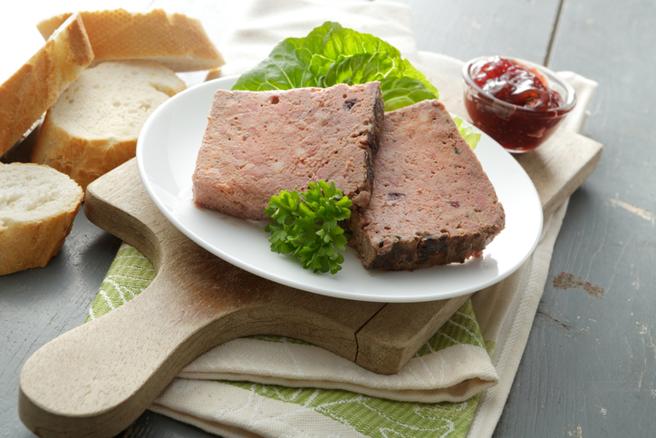
Pâtés contain pork liver, and the pâté has a large amount of starches, bacon, and meat scraps, as well as low-quality flour, milk proteins, stabilizers, and salt. The WHO recommends a maximum of 5g of salt per day for adults; well, a dessert spoon of pâté contains about 20% of this amount, and we add nitrites and monosodium glutamate (associated with cancer, fibromyalgia, etc.), a flavor enhancer widely used in many processed products.
Dairy Desserts
According to Saavedra, dairy desserts are not free from harmful additives such as sugar or sweeteners. In fact, “A sweetened yogurt (125g) contains 13% sugar, which is two packets.” This is outrageous considering that the WHO recommends a maximum intake of 20g to 25g daily. And if we also consider products that contain sugar as part of their ingredients, such as pasta, bread, etc…
The author of The Book of Sin Azúcar.org, Antonio R. Estrada, and creator of the blog of the same name, states: “With a natural yogurt with strawberry jam, you are ingesting 6.5 sugar cubes!!!”
We recommend organic Greek yogurt and kefir, which do not contain sugar.
Fried Tomato
Processed fried tomato is a bomb for your body as we are ingesting up to 9.4 sugar cubes if the jar is small.
Flavored Waters
What need is there to drink water with sweeteners and additives? A prepared green tea can contain up to 10.5 sugar cubes in a single glass, or a soy and orange drink contains 6.5 sugar cubes.” All these products are presented as healthy when they are the complete opposite.
Crab Sticks
The food industry seeks outlets for all scraps, so they invent products like crab sticks, made with surimi, whose composition consists of fish meat with little commercial value, water is extracted and mixed with sugar, salt, flour, egg white, or phosphates, among others.
Just as with sausages and cold cuts, in this case, “surimi corresponds to the lowest quality fish,” like Alaskan pollock, a fish of modest flavor to which artificial flavorings are added to imitate the taste of higher quality ones, from crab to lobster.
Gelatin
It is incomprehensible how gelatin has become fashionable lately thanks to advertising. Many people have incorporated gelatin into their diet believing it is high in protein. Gelatin is made from low-quality collagen, a protein found in the connective tissue of animals, that is, skin, tendons, cartilage, and bones.
Saavedra says that despite what advertising claims, gelatin is low in nutrients because the protein from collagen is of low quality. Moreover, gelatins often contain a lot of sugar and flavorings (additives). Gelatin itself is tasteless.
In an interview for the newspaper El Mundo, she spoke about the food industry and its role regarding consumers: “It’s a business. The food industry has no interest in consumers having good health, but in consuming their products. Many children’s food products are modifying their ingredients so that the word sugar does not appear on the label. They are using maltodextrins, but they are sugars. They play a lot with advertising and manipulation, trying to create the false idea that it is a healthy product.”
So if you want to take care of yourself, take care of your diet.
If you need a good snack
https://quiropractica1.com/30-meriendas-faciles-y-saludables/
Related Posts