
Top 5 foods to improve your gut health.
Top 5 Foods to Improve Your Gut Health
Gut Health
Before diving into matters such as improving digestive health and preventing intestinal diseases, such as leaky gut syndrome, it would be helpful to have some background information.
So what exactly are probiotics? The etymology seems to come from both the Latin “pro” (for) and the Greek “bios” (life). Although some companies have lined their pockets by capitalizing on new consumer trends, scientific research on probiotics continues.
Therefore, it is very important not to be misled by labels on certain products. The following is an explanation of the nature of probiotics and the role they are believed to play: Probiotics are considered to be bacteria, or “good” microorganisms, which, when transported “alive” directly to the digestive system, positively modify gene activity.
The result is the elimination of harmful microbes and a variety of health benefits, including:
• Improvements in the digestive system
• Production of essential vitamins, such as B12 and K
• Reduction of cholesterol
• Reduction of allergy risks
• Strengthening the immune system However, studies in the field of probiotics are constantly developing, so not all proposed benefits have been officially adopted by the EFSA (European Food Safety Authority), as not all claims are currently quantifiable, and due to the multitude of associated criteria, such as strain type, genus, species, storage conditions, and method of administration, among others.
That said, let’s look at some tips with which you can improve your health through probiotic foods.
Top 5 Probiotic Foods
1.- Fermented Vegetables and Cheeses
First of all, any fermented vegetable or fermented dairy product must be unpasteurized to avoid destroying the natural generation of probiotics. Sauerkraut (fermented or pickled cabbage) is one of the most popular choices due to its high content of probiotic strains, such as lactobacillus and bifidobacterium.
Here are some alternatives:
• Pickled olives. They are rich in probiotics. Make sure they are organic and buy them at your local herbalist or fruit shop (avoid commercial brands).
• Pickles. As in the previous case, try to find a local manufacturer or variety and avoid commercial brands, as you will not get the required source of probiotics.
• Fermented cheese: Like all probiotic foods, they must be organic to preserve the natural generation of probiotics.
It is even said that fermented cheese can have even more “good” bacteria. Among other benefits, by introducing more probiotic foods into your diet, you can; combat diarrhea, make food more digestible, generate more good bacteria, and improve lactose intolerance.
2.- Kefir and Kefir Grains
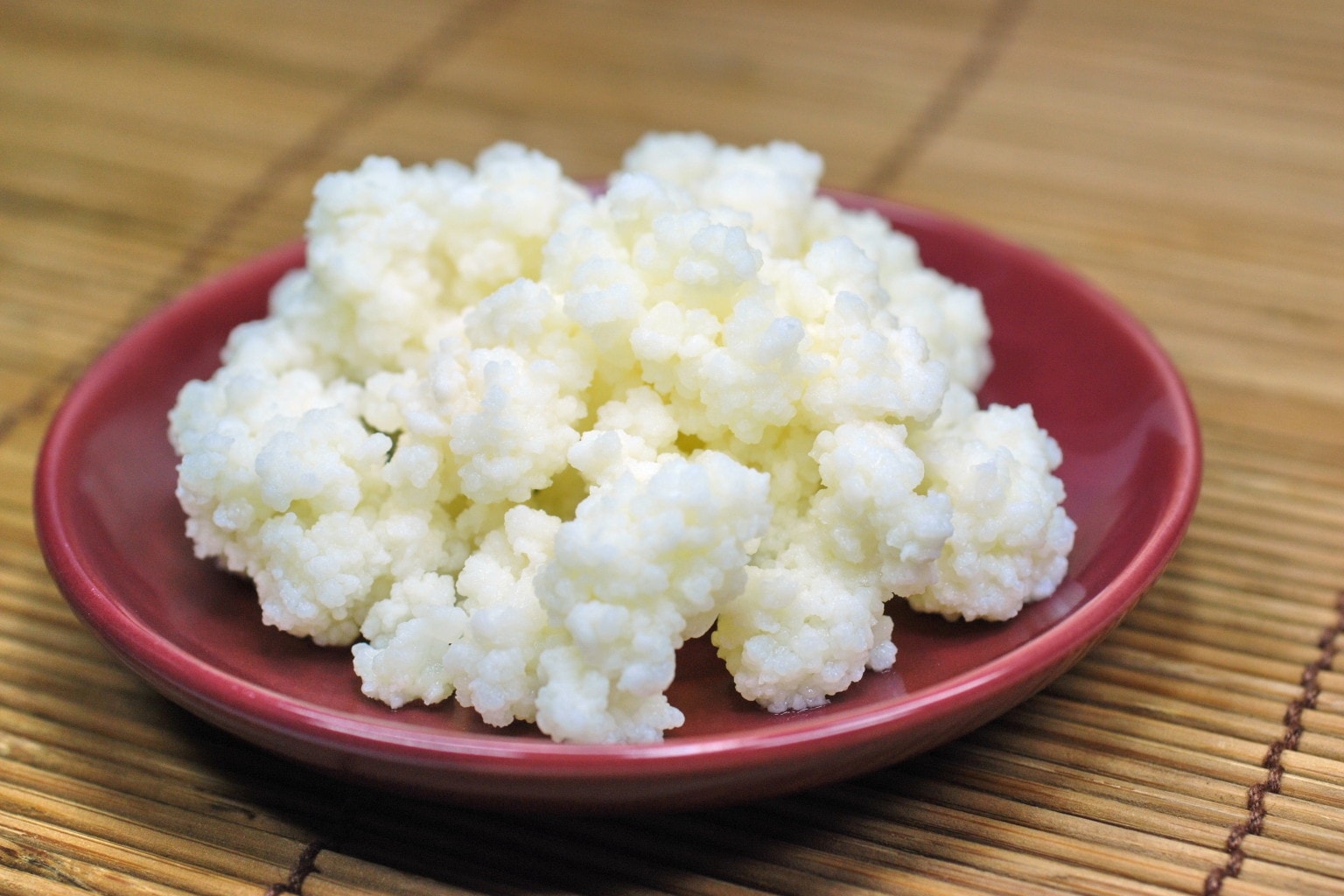
Kefir is a very tasty and refreshing milk drink. Its origins are believed to be in the Caucasus Mountains of Asia, and the grains look quite like cauliflower. Kefir contains a high level of probiotics, or microorganisms, such as yeast and lactic bacteria, and other essential substances, including lipids, sugars, proteins, and vitamins (B12 and K2 – among others).
This means that consuming kefir can provide a variety of benefits, including; relieving or even preventing leaky gut syndrome, it is said to help cure irritable bowel syndrome, and it may increase the density of our bones. Traditionally, it is consumed in the form of a fermented milk drink with Kefir grains (see fermented foods above for more benefits).
The result is a lactose-free source rich in probiotics. The popularity of Kefir has grown significantly in Europe, particularly in Scandinavia.
If you decide to buy grains, make sure to add them to unpasteurized milk and leave the container at room temperature for at least 12 hours (preferably 24). Alternatively, you can use kefir grains.
3.- Homemade Lemonade
It takes time and some effort, but it is worth it as this tasty and probiotic-rich drink will boost the immune system of all family members, in addition to improving your health. You will need the following:
• Juice from approx. 10 lemons or limes
• Kefir grains
• 2.5 l filtered water (not too cold)
• 150-200g pure cane sugar (unrefined)
In a large (airtight) jar, combine the following ingredients, stirring continuously; lemon (or lime) juice, kefir grains, water, and sugar. Let the mixture ferment for a minimum of 2 days – enjoy!
4.- Yogurt
Recent studies indicate that consuming a dairy drink a day or yogurt containing bacteria in three strains can provide multiple benefits to our intestines.
Probiotics modify gene activity in a favorable way, just as certain components of pharmaceutical products do, in order to help transmit instructions to cells to replace unwanted genes.
Thus, our immune system receives a boost, in addition to pressure benefits. If you choose milk or yogurt as a source of probiotics, only buy organic yogurt or raw milk (without preservatives, additives, or added sugars).
If you want to add more flavor, you can turn it into a Mango Lassi (a typical drink from India).
5.- Varieties of Soy
Here we have many possible options, all rich in probiotics and that you should be able to find at your local herbalist or, in some cases, a supermarket.
Fermented soy (see the fermented foods section for associated benefits) contains several strains of probiotics, which improve intestinal and digestive health.
One of the most popular options is Miso. It can be purchased in the form of a spice or paste and is mainly used in the preparation of Japanese soups. Miso is obtained by fermenting soy with a type of Japanese fungus called Koji.
In addition to soup, you can spread it on bread or toast. Another option is Tempeh. Similar to Miso, it is a variety from Indonesia although it is consumed as a patty. Its texture is like a cake and depending on whom you ask, its flavor is nutty or smoky.
Tempeh contains several probiotics that can not only help combat harmful bacteria but is also an important source of protein. A great option for vegans and vegetarians as it serves as a meat substitute in certain meals. Consume it raw to retain its probiotic properties.