
Alternative to meat: Quick guide to diversify your diet
Alternative to Meat
SEITAN:
Also called vegetable meat, due to its appearance being so similar to it once prepared, seitan is a food made from wheat flour, specifically from wheat gluten (alternative to meat, be mindful of its gluten content). It is made by kneading the flour and forming balls of dough like when making bread or pizza, and then a washing process is carried out that will end up removing the flour and only leaving the gluten. After that, it is boiled with soy sauce and Kombu seaweed for greater vitamin and mineral content.
This food has many properties that we can easily take advantage of. Simply adding seitan to our diet will improve several aspects of our nutrition. It is a food with a high amount of protein, almost 24% of its total weight. It is much more digestible and milder than most protein-rich animal foods like eggs, meat, milk… Seitan is a recommended food for those who suffer from high cholesterol, as it is low in fat. It is very low in calories. Those with gluten intolerance cannot consume it, as it is made of gluten. It has nothing to envy from meat foods in terms of protein, and it has not been treated with antibiotics, hormones, and the like. It is a source of B vitamins and iron. Additionally, it contains more calcium than meat. Its lecithin content is abundant. It is low in sodium, making it advisable for those who suffer from hypertension, fluid retention… It contains no sugar.
TOFU:
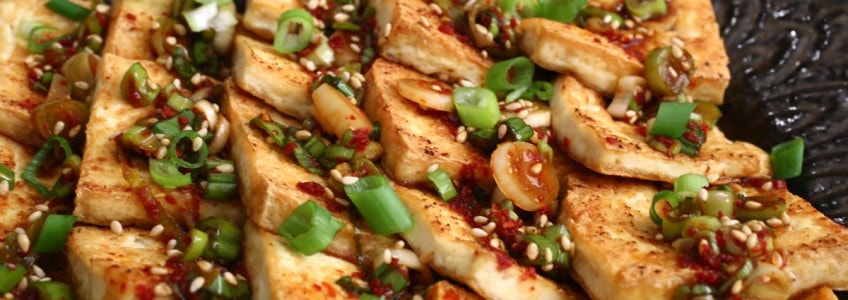
Tofu is the Japanese name for soybean cheese. In the East, they have been consuming it for thousands of years; for them, it is an essential food due to the variety of dishes that can be made with it and its high protein content.
This food, so consumed by the East, has many beneficial properties for our body and is a good alternative to meat. Extremely high content of high-quality plant proteins. It also contains all ten essential amino acids in sufficient amounts. Despite its high protein content, tofu is a more digestible food than other protein-rich foods like eggs, milk, meat… It contains no preservatives, colorants, or chemicals, and no antibiotics or hormones have been used for its fattening as is done with livestock. Its lecithin levels are high. Due to its calcium content, tofu is recommended for women going through menopause. It is also advisable for growing children or people with osteoporosis. It even contains more calcium than meat. It is a food with low caloric intake. It contains no lactose, gluten, or cholesterol. Tofu is a food that contains lysine abundantly. Lysine is an essential amino acid that many cereals and derivatives lack. In contrast, they are well-endowed with sulfur-containing amino acids, methionine, and cystine, which are not so abundant in soy, and therefore not in tofu either. For this reason, the proteins from soy and the proteins from cereals complement each other so well, and the net utilization of proteins increases when we combine cereals with tofu and other soy derivatives.
SPIRULINA:
Spirulina (Spirulina maxima) is a unicellular algae that has a spiral shape (hence its name), and is blue-green in color due to the presence of chlorophyll that gives it the green color and phycocyanin, a pigment that gives it the bluish color. Spirulina is a superfood that offers more digestible proteins than those from beef and contains a surprising variety of nutrients: vitamins, macrominerals, minerals, essential fatty acids, proteins, nucleic acids (DNA and RNA), chlorophyll, and a wide range of phytochemicals. (see our article)
QUINOA:
Botanically, it is not a cereal, as cereals belong to the grass family. Quinoa belongs to the family of chenopodiaceae (like spinach, chard, and beet) but is compared to cereals due to its composition and how it is eaten. It is important to highlight its high protein content, higher than that of wheat and corn. Depending on the variety of quinoa, it can contain up to 23% of this nutrient. Its protein (alternative to meat) is complete, meaning it has high biological value. Unlike other seeds, it is rich in amino acids like lysine (important for proper brain development), arginine, and histidine, which are essential for growth during childhood. It is also a high source of methionine and cystine. For all those who follow a vegetarian diet, consuming quinoa is essential as it provides a complete protein and does not need to be complemented with any other food. Quinoa also contains iron, calcium, magnesium, manganese, copper, potassium, zinc, phosphorus, selenium, and vitamin E. It is very good when mixed with other vegetables or fruits or eaten as a cereal for breakfast.
PUMPKIN SEEDS:
Pumpkin seeds have been known for centuries as natural substances with healing properties. These are beneficial for the body, containing up to 24.5% protein, fatty acids, minerals, essential amino acids, cucurbitacin, and cucurbitic acid. They have anti-inflammatory, emollient, and antiparasitic properties. They contain a good amount of zinc, phosphorus, riboflavin, thiamine, vitamin B6, folate, vitamin B-5, iron, magnesium, copper, selenium, vitamin K, vitamin, and manganese. Pumpkin seeds are eaten as a snack or during the day.
ALMONDS:
Almonds are exceptionally rich in protein. In fact, they contain more protein than meat for the same amount of food consumed. The problem is that we never eat as many almonds as we do meat or eggs (in fact, they would be indigestible) but they are an important source of protein in any case that we should not neglect, especially if we follow a vegetarian diet. Remember, however, that plant protein, alternative to meat, is of low biological value, meaning each vegetable independently does not contain all the essential amino acids, and therefore it is necessary to combine different types of vegetables (legumes, cereals, nuts, and seeds) to obtain all the amino acids that our body needs. Almonds are a good source of the amino acid phenylalanine, important for brain function. Almonds contain vitamin B-2, B-3, folic acid, calcium, magnesium, manganese, phosphorus, manganese, selenium.
PEANUT:
The peanut or groundnut is a nut with many properties and also has a considerable amount of protein. Every 100 grams of peanuts have 27 grams of protein (alternative to meat is surprising). The peanut, despite its nutrients and properties, should be eaten in moderation as it is heavy to digest. Peanuts are a good source of niacin and also contain vitamin B-1, B-2, B-3, B-5, B-6, vitamin E, folic acid, calcium, iron, copper, potassium, iron, magnesium, zinc, and selenium.
OATS:
Oats are a popular food among bodybuilders and gym enthusiasts. Whole oats provide both insoluble and soluble fiber, and moreover, oats are also a great source of protein and an alternative to meat. The proteins found in oats are of a higher quality than those found in most other cereals. Oats are easy to prepare, mitigate hunger, and mix well with other protein sources to aid in muscle mass development. The quality of the proteins in oats is equal to those in soy flour, according to the World Health Organization, although the quality of oat protein is not as high as that of proteins found in meat, fish, eggs, and isolated soy protein powder. The distribution of proteins in oats is similar to that found in legumes, such as lentils and dried legumes.
If you have already found your alternative to meat, increase the consumption of that and tell us your feelings. Recommended reading also spirulina www.quiropractica1.com