
Discover how foods rich in folate can improve your health and prevent deficiencies. Learn which…
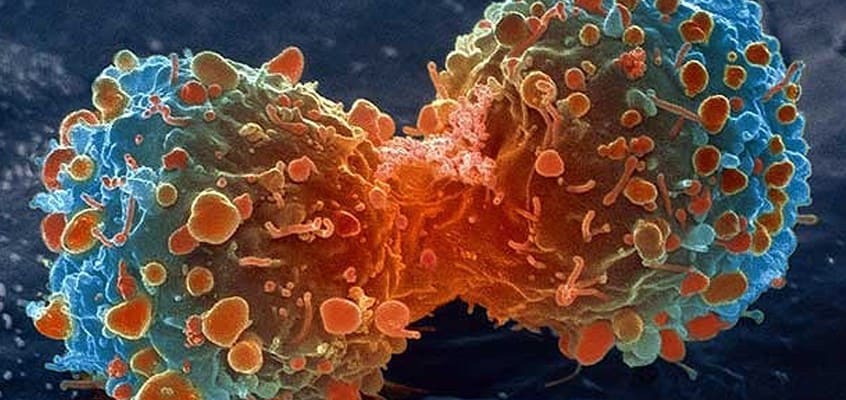
The best treatment for cancer.
The best treatment for cancer
Dr. Dean Ornish, a popular physician known for his work in the prevention and overcoming of disease through lifestyle choices. He led the research that followed 30 men with low risk of prostate cancer who were decidedly against traditional medical treatments such as surgery and radiation. The men underwent 3 months of comprehensive lifestyle changes to address the causes.
They altered their diets, established a consistent exercise regimen, and applied stress management techniques for one hour each day.
After 3 months, the men had changes in the activity of about 500 genes, including increased activity of 48 disease-preventing genes and deactivation of the activity of 453 disease-promoting genes involved in prostate and breast cancer.¹
Dr. Ornish, founder and president of the nonprofit organization “Preventive Medicine Research Institute” in Sausalito, California. He is a clinical professor of medicine at the University of California, San Francisco. Ornish received his medical training in internal medicine at Baylor College of Medicine, Harvard Medical School, and Massachusetts General Hospital. He received a Bachelor of Arts Summa Cum Laude from the University of Texas at Austin, where he delivered the commencement address.
The implications of this study are enormous.
Conventional wisdom told people that they ultimately felt powerless to fight cancer: It’s in their genes and there’s nothing they can do to change their fate. This attitude turned the average person into full-fledged victims and also made medical treatments the only viable option. Epigenetics returns the power of being well again to their hands and to having cancer treatment. As Dr. Ornish states on June 17, 2008, in the Proceedings of the National Academy of Sciences:
“In just 3 months, I can change my hundreds of genes simply by changing the way I eat and how I live … and it’s not just about men with prostate cancer.”
In November 2006, the article in Discover magazine titled “DNA is not destiny” further emphasizes these points. “Epigenetics is showing that we have some responsibility for the integrity of our genome… Previously, genes predetermined outcomes. Now everything we do – everything we eat or smoke – can affect our gene expression and that of future generations.” In 2006, researchers at Yale University demonstrated that genes play only a 25% role in determining your lifespan. This data, along with British research from 2006, revealed that overweight women are 60% more likely to develop different types of cancer, thus demonstrating that some lifestyle factors are much more important than genetics.
“Genes have been there for thousands of years, but if cancer rates are so changing in life, then that has little to do with genes,” said Michelle Holmes, cancer treatment expert at Harvard University, in “USA Today” in 2010.²
You can see how the genetic issue becomes almost irrelevant when exposure to Western lifestyle causes an increase in the incidence of certain types of cancer among ethnic groups or regions that have not had to face the disease before.
A clinic that started in Zimbabwe saw the consequences of the introduction of “modern” commercial life.
While the greatest fear in the area used to be infectious diseases, we have witnessed firsthand how Westernization has produced an increase in heart disease rates and certain uncommon types of cancer that rarely occurred in that part of the world.
This excerpt has been taken from the book “The Cancer Killers”. Nothing in medicine can take the place of your body’s natural defenses that fight diseases. The book “The Cancer Killers” was co-written by Dr. Charles Majors, who defeated stage 4 cancer using all natural tools and techniques (cancer treatment).
The best cancer treatment is to optimize the body. Dr. Marc Bony
References:
– ¹Ornish, Dean, and Mark Jesus M. Magbanua, Gerdi Weidner, Vivian Weinberg, Colleen Kemp, Christopher Green, Michael D. Mattie, Ruth Marlin, Jeff Simko, Katsuto Shinohara, Christopher M. Hagg, Peter R. Carroll, “Changes in Prostate Gene Expression in Men Undergoing an Intensive Nutrition and Lifestyle Intervention,”
Proceedings of the National Academy of Sciences, June 17, 2008, Vol. 105, No. 24, 8369-8374, www.pnas.org_cgi_doi_10.1073_pnas.0803080105. – ²Associated Press, “Experts: One-third of Breast Cancer Cases Avoidable,” USA Today, March 25, 2010, http://www.usatoday.com/news/health/2010-03-25-breast-cancer_N.htm.
Related Posts